
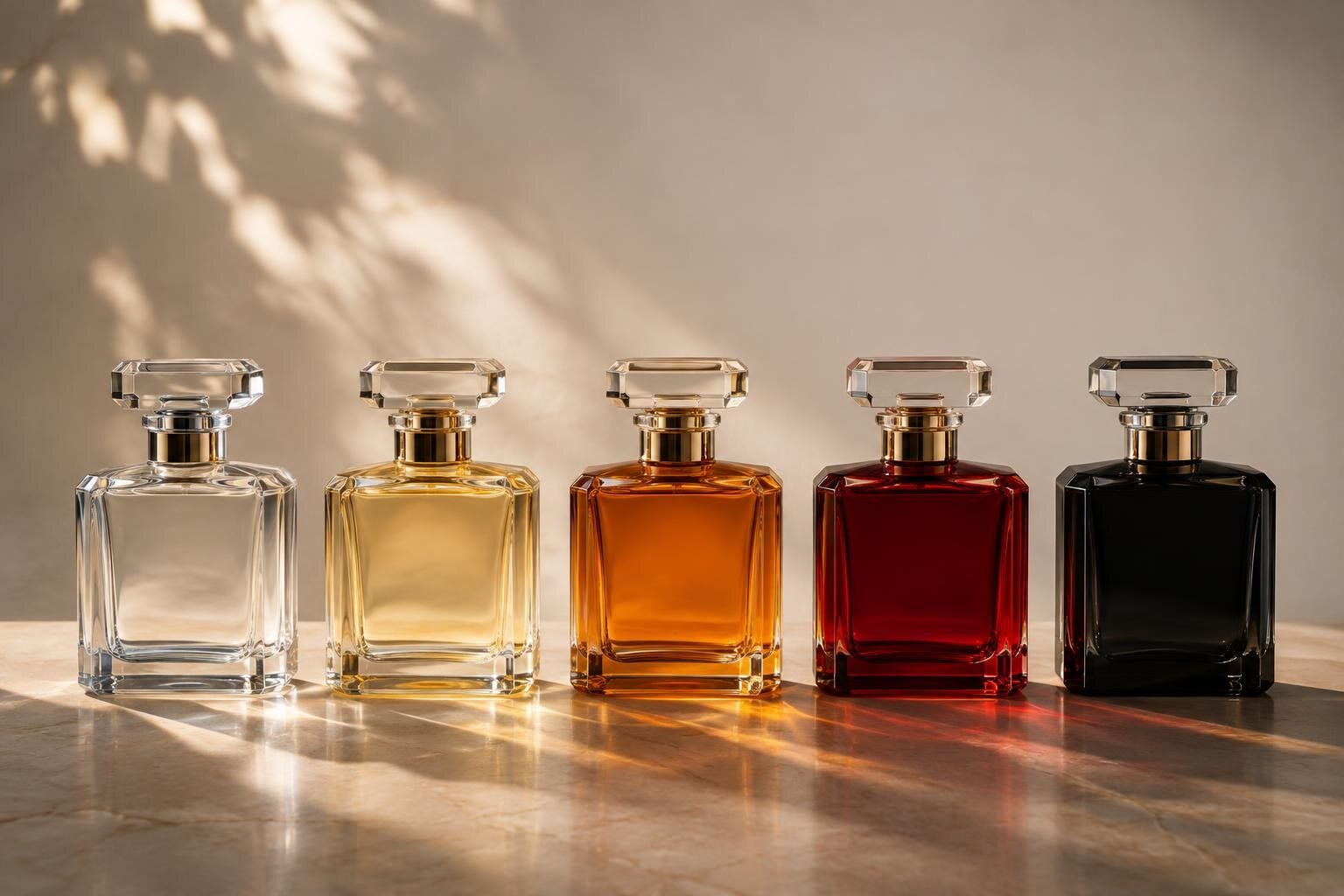
Walk past any perfume counter this month and you will see the same names again and again with a new word tacked on: Elixir, Intense, Blush, Violet. This week alone brought new versions of Dolce&Gabbana The One, four violet Daisies from Marc Jacobs, and announced additions to Carolina Herrera’s Good Girl and Rabanne’s Fame. The industry has a word for these: flankers.
Once you know what a flanker is, the perfume aisle gets much easier to read, and much harder to be fooled by.
A shared name is a family resemblance, not a promise.
What a flanker is
A flanker is a new perfume that borrows something from an existing one: its name, its bottle, or part of its scent. The original is often called the pillar. Think of the pillar as the first film and the flankers as the sequels and spin-offs. They live under the same title, but each one is its own creation, with its own formula.
The Daisy family is a good example most people have seen. The original Daisy came out in 2007. Daisy Eau So Fresh followed in 2011, Daisy Love in 2018 and Daisy Wild in 2023, each with a different personality under the same flower cap. A flanker can even have flankers of its own: Good Girl Blush was a flanker of Good Girl, and it now has its own Elixir and the newly announced Blush Delight.
Some flankers become bigger than the scent they came from. Chanel’s Coco Mademoiselle, released in 2001 as a lighter, brighter cousin of Coco, is often described as the most successful flanker ever made.
Why houses keep making them
Launching a perfume from nothing is expensive and risky. A new name needs a new bottle design, a new campaign and years of work to become familiar. A flanker borrows a name people already trust. Fans of the original are likely to give it a try, and people who found the original not quite right, too heavy or too sweet, get a second chance to love the family.
That logic explains the timing too. Richer, darker versions tend to land before the holidays, and fresher ones before summer.
Reading the words on the bottle
No law defines these words, so treat them as hints, not promises. Still, there are patterns:
- Intense, Elixir, Parfum, Absolu: usually richer, warmer and longer lasting than the original. This ties back to the concentrations in Lesson Four.
- Fresh, Light, Eau Fraîche, Eau So Fresh: usually brighter and lighter, often aimed at warm weather.
- A color or a mood (Blush, Violet, Wild): a twist on the theme, often with new notes.
- Limited or collector’s edition: be careful here. Sometimes it is a new scent, and sometimes it is the very same perfume in a new costume. Rabanne’s Fame Blooming Pink, for instance, was sold as a collector’s edition of Fame in a glittering pink bottle, not as a new fragrance.
How to shop a flanker
A shared name is a family resemblance, not a promise. If you love the original, the flanker may still miss, and if the original never worked for you, a flanker might be the version that does. The only reliable test is the one from Lesson Five: smell it on your own skin and give it time. Compare the note list with the original’s, too. The notes that changed are the clue to what the perfumer was after.
From the Archive
Paris, 1985. Dior launched Poison, one of the loudest perfumes of its decade. Nine years later came Tendre Poison, then Hypnotic Poison in 1998, Pure Poison in 2004, Midnight Poison in 2007 and Poison Girl in 2016. One name carried six distinct perfumes across three decades, a textbook case of a family built from a single hit.
At the Counter
Ask for paper strips of an original and one of its flankers, write the names on them, and smell them back to back. Then put the one you prefer on your skin, and only that one, so you are not judging two scents at once.
Sources
- Wikipedia: Flanker (perfume) (definition; Dior Poison family dates)
- Bois de Jasmin: Perfume Flankers 101 (pillar fragrances; Coco Mademoiselle)
- Now Smell This: Marc Jacobs Daisy Violet x 4 (Daisy family dates)
- Now Smell This: Good Girl Blush Delight (Good Girl family)
- Rabanne: Fame Blooming Pink (collector’s edition of Fame)
- The Candy Perfume Boy: Fabulous Flankers (why houses make flankers)
More on The OneDaisyCarolina Herrera 4Chanel 7Dior 3Marc Jacobs 5Rabanne 3
Try this
Pick a perfume you own or know well and look up its family on the brand's site. Read one flanker's note list beside the original's and circle the notes that changed. That is the perfumer's idea in a few words.
Further reading & listening
Test your nose
Keep reading
The School, Lesson Ten · Nov 23
Five Hundred Bottles Before Breakfast: How Perfumers Are Trained
The School, Lesson Eight · Nov 18
Spray, Then Hands Off
The School, Lesson Seven · Nov 16