
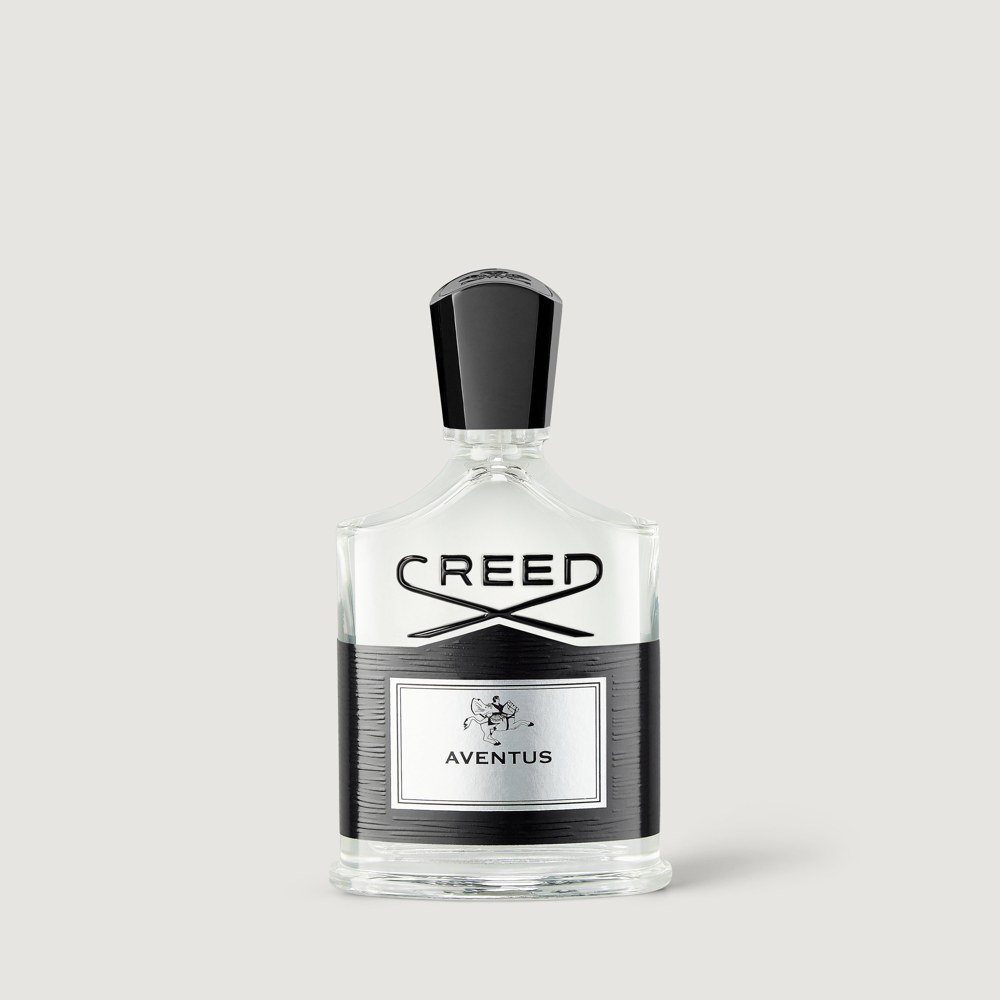
This week L’Oréal put Creed in front of Chinese buyers for the first time, which makes it a good moment to tell the story of the bottle that made Creed worth buying in the first place. Aventus is a sixteen-year-old men’s fragrance with a horseman on the label, and it is one of the most influential men’s fragrances of its generation, even though it never belonged to a fashion label.
Here is how one perfume moved a company through three owners in six years, and what that means for the person who just wants to know whether it smells good and what it costs.
Few modern perfumes have been chased by so many imitations.
A house with a story, and a gap in the paper trail
Creed tells a grand origin story: a London tailoring house founded in 1760, royal clients, and perfumes made for famous names across the centuries. Historians have not been able to back that up. Researchers have found no outside record of the company before about 1970, and the first Creed perfume trademark was registered in France in 1979. The writer Gabe Oppenheim’s book The Ghost Perfumer also challenges Creed’s claim that its scents are composed by the family alone; the perfumer Pierre Bourdon has said he created several earlier Creed classics.
None of that is a verdict on how the perfumes smell. It is a reminder that in luxury fragrance, the story on the box and the record in the archive are not always the same thing, and that the scent has to carry the weight.
2010: the launch
Aventus arrived in 2010. Creed lists its notes as Calabrian bergamot, Sicilian lemon and a blackcurrant-leaf accord on top, a pineapple accord with pink pepper and jasmine in the heart, and birch, patchouli and musk underneath. On paper it is an odd pairing: bright fruit over a smoky, leathery birch. In practice that tension is what people remember.
Creed says it still hand-mixes, macerates and ages the juice at its own facility in Ury, France, and leaves it unfiltered. Erwin Creed has credited the scent’s popularity with paying for the house’s New York boutique. Creed has since grown the line into a family: Aventus for Her, a fresher Aventus Cologne, and a deeper Absolu Aventus.
The copies
Few modern perfumes have been chased by so many imitations. A 2022 roundup on Osmoz, a fragrance site, named eight alternatives sold as Aventus look-alikes, including Armaf’s Club de Nuit Intense Man, Al Rasasi’s Rumz 9325 Pour Lui and Al Haramain’s L’Aventure. Several come from houses based in the Gulf, and they sell for a small fraction of the original’s price.
The logic is simple. A hit that costs hundreds of dollars leaves a large crowd who love the smell but will not pay for it, and a cheaper bottle that smells close enough finds them. Some buyers also use a copy to decide whether they like the profile before spending real money. Aventus did not invent this market, but it showed how big it could get, and the same pattern has repeated around nearly every bestseller since. A copy is not the same perfume, and quality varies a great deal from one maker to the next.
The money: three owners in six years
Success made Creed a target. In February 2020 the investment firm BlackRock became its majority shareholder. In June 2023 Kering, the group behind Gucci and Saint Laurent, bought Creed for 3.5 billion euros to anchor a new beauty division. That division did not stay long. In October 2025 Kering agreed to sell the whole of Kering Beauté, Creed included, to L’Oréal for 4 billion euros, and the deal closed on March 31, 2026. Along with Creed, L’Oréal took fifty-year licences for Bottega Veneta and Balenciaga beauty, plus the right to Gucci beauty once Coty’s current licence ends.
This week, the result: Creed in a central spot on L’Oréal’s stand at the import expo in Shanghai, with chief executive Nicolas Hieronimus telling Chinese reporters that many shoppers there go straight to the most exclusive perfumes.
What it costs to try today
Creed’s own US store sells an Aventus Discovery Set with three 10 ml bottles, Aventus, Aventus Cologne and Absolu Aventus, for 300 dollars when we checked on the morning of November 10. That works out to ten dollars a milliliter, which tells you what kind of perfume this is. A decant or a store sample is the cheaper way to find out whether the pineapple-and-birch idea suits you before you buy anything bigger.
Here’s why it matters to you
Big owners bring wider distribution, more flankers and bigger advertising budgets. They can also bring price increases and reformulations, though L’Oréal has announced neither for Creed. The useful habit is the one this paper keeps recommending: note today’s price, check the notes on the brand’s own page, and test on skin before you trust the story on the box.
Sources
- Creed: Aventus (notes and making, checked Nov. 10, 2026)
- Creed: Aventus Discovery Set (price checked Nov. 10, 2026)
- Wikipedia: Creed (perfume house), for history, trademark and ownership dates
- Osmoz: Creed Aventus clone (May 15, 2022)
- L’Oréal: completion of the Kering Beauté acquisition (Mar. 31, 2026)
- Cosmetics Business: L’Oréal finalises 4 billion euro acquisition of Kering Beauté
- Economic Observer via Ifeng Finance (Chinese), Nov. 8, 2026
More on AventusCoty 7Creed 2Gucci 4Kering 2L'Oréal 3
Further reading & listening
Keep reading

Special Report · Nov 22
Dior's Dioriginals: Kurkdjian Restores Diorissimo and Twelve More Classics

Special Report · Nov 17
Opium, in a New Box

Special Report · Nov 15