
For most of perfume’s history, the body mist was the thing in the gift bag. It came free with the real bottle, or it sat by the register at the mall for whoever had ten dollars and a birthday to remember. Then, in about three years, it became the fastest-growing corner of the fragrance business, and a pistachio-scented spray from a brand built on a body cream became one of the most talked-about smells in fragrance.
This is the story of how that happened, and of what it means for anyone deciding where their fragrance money goes this holiday season.
Dollars growing twice as fast as bottles is the sound of prices doing some of the climbing.
A category that doubled
The numbers come from Circana, the market research firm that tracks American beauty sales. In 2024, sales of hair and body mists in prestige stores, the Sephoras and Ultas and department stores, reached about 474 million dollars, up 94 percent in a single year, according to figures reported by Glossy. Circana placed the typical product at an average price of around 25 dollars. That made mists the fastest-growing piece of prestige fragrance that year.
The boom has not been only American. Circana’s European data show body mists and sprays grew 18 percent in value and 17 percent in units across Europe in 2025, as reported by Cosmetics Business.
The growth has kept going in 2026, though the shape of it has changed. In the first half of this year, Circana found that mass-market fragrance, the drugstore and big-box aisle where many mists live, was the fastest-growing beauty category in the United States, with dollar sales up 15 percent. Units, the number of bottles actually sold, rose 7 percent. Hold on to that gap. We will come back to it.
The bottle at the center of it
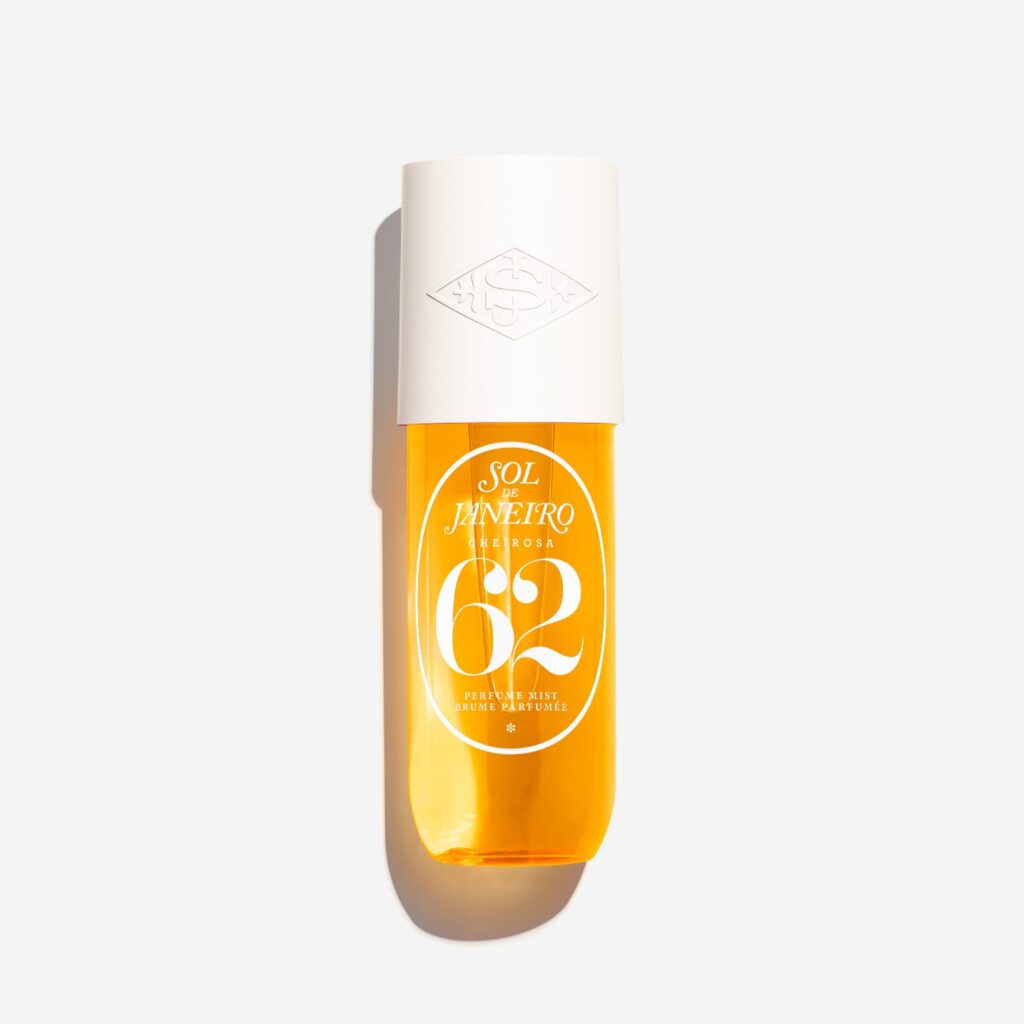
If one product stands for the whole movement, it is Sol de Janeiro’s Cheirosa 62 Perfume Mist. It wears the same scent as the brand’s Brazilian Bum Bum Cream, Sol de Janeiro confirms on its own page. Sol de Janeiro says the name looks back to 1962 and “The Girl from Ipanema,” and the brand’s own page lists the notes plainly: pistachio and almond on top, heliotrope and jasmine petals in the middle, and vanilla, salted caramel and sandalwood at the base. In Portuguese, the brand notes, cheirosa means smelling delicious.
That note list explains a lot of the success. It is a gourmand, the family of scents built around edible notes like vanilla, caramel and nuts, and gourmands have been the defining taste of the decade. It also reads as friendly rather than formal. You do not need to know anything about perfume to understand pistachio and caramel.
Then there is the price. When we checked Sol de Janeiro’s U.S. site early on November 15, the 240 ml bottle was 39 dollars and the 90 ml bottle was 26 dollars. A designer eau de parfum at a department store commonly runs well past 100 dollars. For a young buyer, or anyone feeling the pinch, a 39 dollar bottle is an easy yes.
Who else wants in
Success at that scale gets copied fast. Circana’s Larissa Jensen told Glossy that a hot product’s first surge tends to last about a year before other brands catch on and build their own versions. That is exactly what followed. Glossy has reported mists from Eos, Summer Fridays and Touchland, and luxury houses including Byredo and Penhaligon’s have added the format too.
Bath and Body Works, which has sold what it calls fine fragrance mists since 1990, has been riding the same wave. The company told Glossy its mist category grew 45 percent between 2019 and 2024, that mists had been its top-selling product for six years, and that 19 percent of its new customers in 2024 shopped the mists.
The “intense” step up
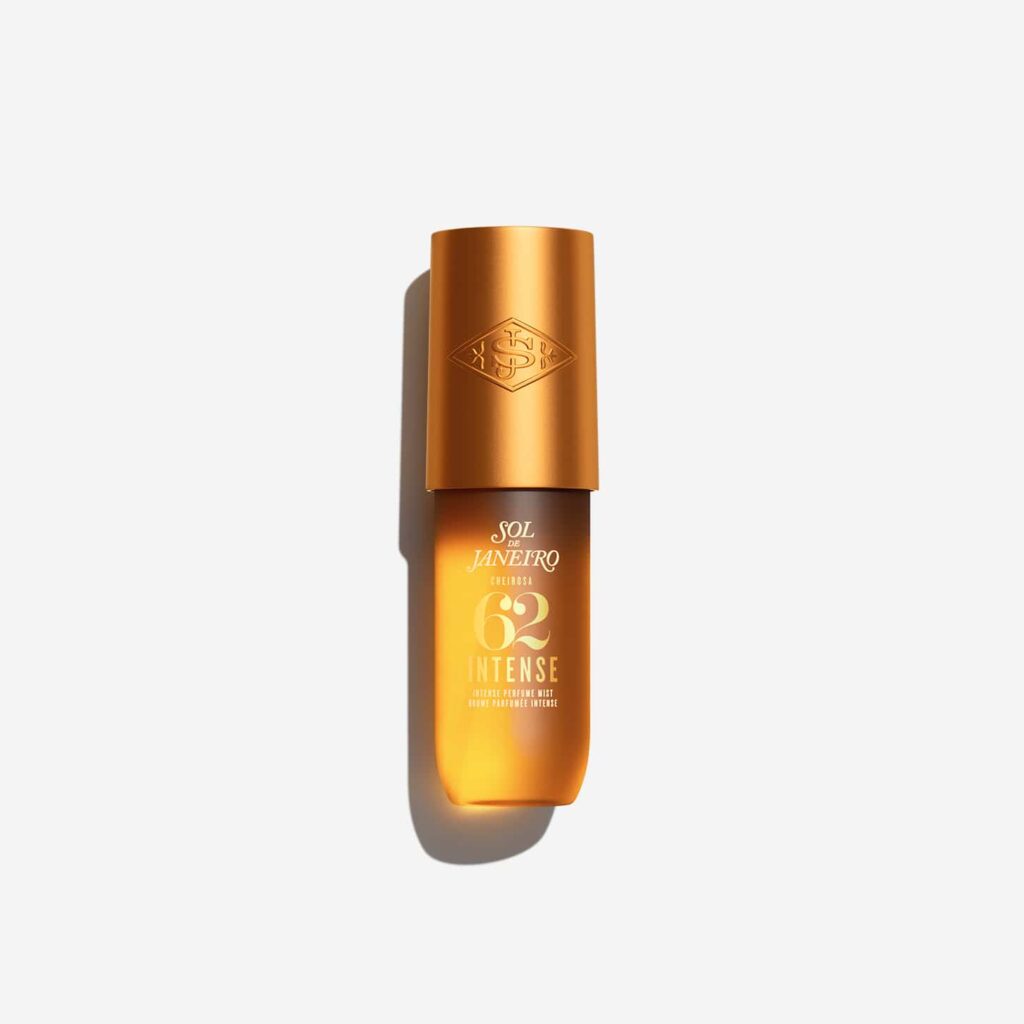
The newest twist answers the most common complaint about mists, which is that they fade. A mist is mostly alcohol and water with a lighter dose of perfume oil than an eau de parfum, so it tends to wear off sooner. In August, Sol de Janeiro launched Intense Perfume Mists, a stronger version the brand says lasts up to ten hours.
Here is where the per-spray math gets interesting. The Cheirosa 62 Intense Perfume Mist comes in a 90 ml bottle for 34 dollars. Work it out per 10 ml and the regular 240 ml mist costs about 1 dollar 63, the regular 90 ml about 2 dollars 89, and the Intense about 3 dollars 78. The chart above lays it out. The Intense is more than double the price per milliliter of the big regular bottle. Whether that is worth it depends on whether you actually get the extra hours, and the reviews on Sol de Janeiro’s own page are honestly split on how different the two smell and wear.
Reading the gap
Back to that gap between dollars and units. When dollar sales grow 15 percent but bottle sales grow only 7 percent, shoppers are paying more for what they take home. Some of that is trading up to bigger sizes and stronger versions, which is a choice. Some of it is plain price increases. Circana saw the same pattern at the prestige end in the first half of 2026: fragrance dollar sales up 6 percent, average prices up 5 percent, and units flat. Dollars growing twice as fast as bottles is the sound of prices doing some of the climbing.
None of that makes mists a bad buy. It does mean the cheap end of fragrance is getting less cheap, and the sticker alone no longer tells you much.
What this means for you
- Do the per-10 ml math. Divide the price by the milliliters and multiply by ten. It is the only fair way to compare a mist, an intense mist and an eau de parfum.
- Know what you are buying. A mist is built to be sprayed generously and refreshed through the day. If you want a scent that lasts from breakfast to dinner, a stronger concentration may cost less in the end than reapplying a mist.
- Use mists to explore. Their best use may be as a low-cost way to learn which scent families you like before you spend real money on a bottle.
- Watch the sets. This season Sol de Janeiro is selling Sol Many Options, nine full-size perfume mists for 150 dollars, which the brand says saves 84 dollars compared with buying them separately. If you are curious about the whole range, that is a better way in than one bottle at a time.
The body mist began as the free gift. It is now one of the most important doors into fragrance, and the people walking through it are the collectors of the next ten years. That alone makes it worth paying attention to.
Sources
- Sol de Janeiro: Cheirosa 62 Perfume Mist (notes, prices checked November 15, 2026)
- Sol de Janeiro: Cheirosa 62 Intense Perfume Mist
- Sol de Janeiro: Sol Many Options set
- Glossy: Inside the hair perfume and body mist explosion (Circana 2024 data)
- Glossy: Sol de Janeiro launches Intense Perfume Mists (August 17, 2026)
- Glossy: How Bath and Body Works stayed ahead of the body mist craze
- Retail Dive: Fragrance drives beauty sales, first half of 2026 (Circana)
- Cosmetics Business: Top fragrance trends of 2026 (Circana European data)
More on Bath & Body Works 4Byredo 4Penhaligon's 4Sol de Janeiro 3
Watch, listen & look
Keep reading

Special Report · Nov 22
Dior's Dioriginals: Kurkdjian Restores Diorissimo and Twelve More Classics

Special Report · Nov 17
Opium, in a New Box
Special Report · Nov 10