
Every old perfume on a department-store counter carries a quiet question: is this the thing your mother wore, or something that only shares its name? On October 1, Dior answered that question in public for 13 of its classics. It moved them into one collection called the Dioriginals, put them all in the oval bottle the house first used in 1948, and handed the formulas to its perfume creation director, Francis Kurkdjian, with a brief to bring each one back toward what it was when it was new.
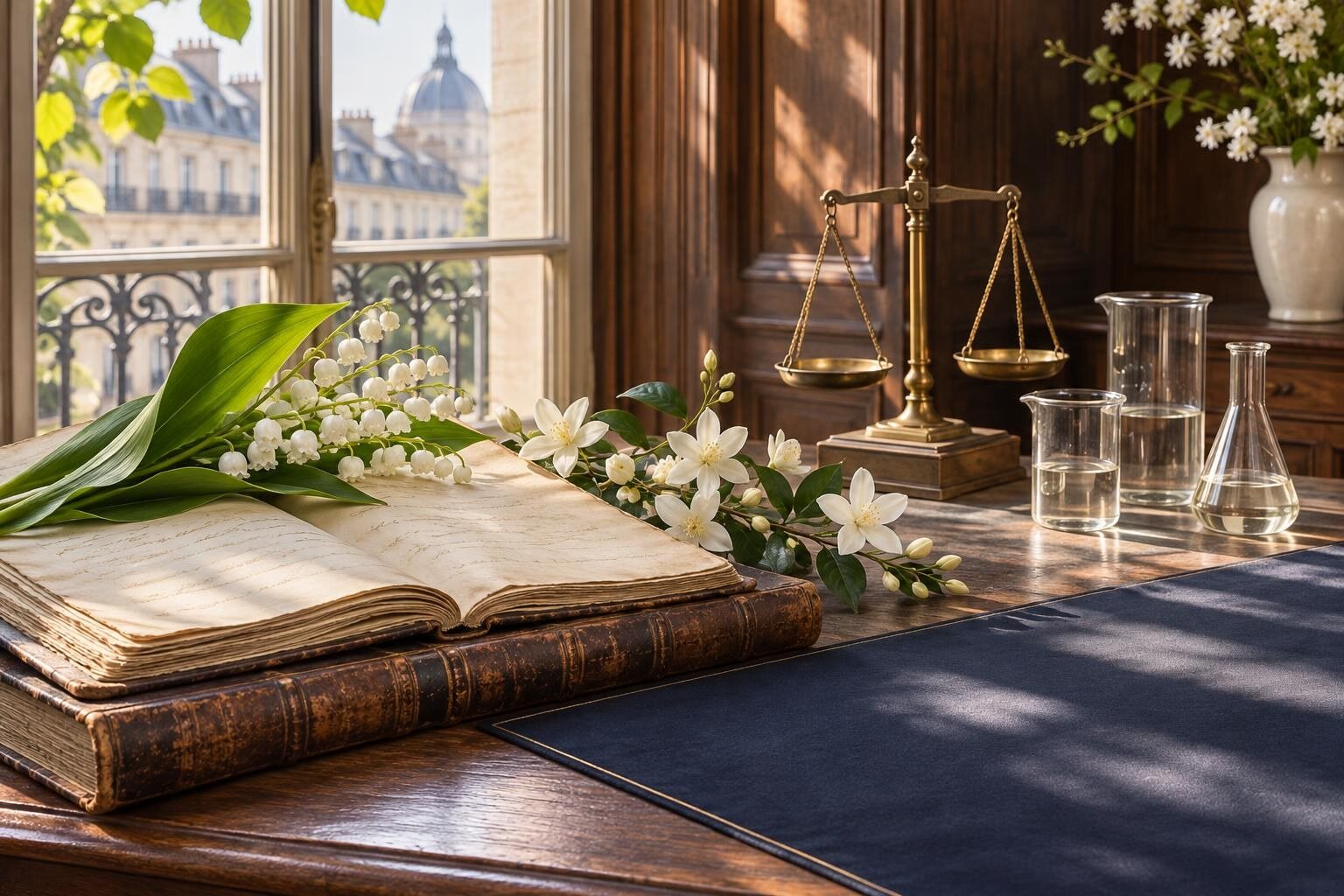
Seven weeks later the collection is getting its first real scrutiny, and this week Kurkdjian explained what he found inside one of the most famous of them. Diorissimo, the 1956 lily of the valley by Edmond Roudnitska, had over the years picked up what he described to Fashion magazine as an overripe-watermelon quality that was never in the original. He called the modern version “too sweet and wet,” and said his team brought back the jasmine with an older way of building it.
A restoration is a promise about the past, and the only way to check it is with your own skin.
What is in the collection
The 13 run from Diorama, the house’s second perfume in 1949, to Higher Energy in 2003. In between sit Eau Fraîche (1955), Diorissimo (1956), Diorling (1963), Dioressence, Diorella (1972), Jules (1980), Dune (1991), Dolce Vita (1995), Dune pour Homme (1997), Higher (2001) and Forever and Ever. Every one is sold as Eau de Toilette, the lighter concentration that most of these were built around. Dior sorts them into three families: florals, chypres (perfumes built on a citrus top over a mossy, woody base) and woods.
Kurkdjian has said he approached the work in two periods, the later of which he calls “Dior in Paris” and dates from 1979 to 2003. That window is where the one genuine puzzle in the collection lives. Dior’s own page says Dioressence was created in 1979 by Max Gavarry. Long-standing references, including the perfume encyclopedia Olfastory, date the original Dioressence to 1969 and credit Guy Robert, with later reworkings. Both can be partly true for a perfume that has been reformulated more than once, but it is worth knowing that the house’s date and the history books’ date are not the same.
On Dior’s US site most of the line, including Diorissimo and Dioressence, was listed at $155 when we checked early Sunday, November 22.
Why perfumes drift in the first place
A perfume formula is not carved in stone. It changes for at least three ordinary reasons. Raw materials change: a natural oil from one harvest does not smell exactly like the last, and suppliers come and go. Rules change: the industry’s safety standards have restricted several classic materials over the decades, most famously oakmoss, the earthy base that defines a chypre. And taste changes: a house reworking a formula for a new generation can nudge it sweeter or cleaner, a little at a time, until the sum of small edits is a different perfume.
That is why the oakmoss detail on the new labels is interesting. Olfastory read the ingredient lists Dior published and found oakmoss extract named on five of the 13: Diorella, Dioressence, Diorama, Diorling and Jules. Oakmoss is still allowed in limited amounts in modern, treated forms, and its presence on those labels suggests the restorations lean on it where the style demands it. Eau Fraîche, which Dior files with the chypres, lists none.
Why a big house would bother
From the business side, the move is tidy. Dior already owned these names and their history. Putting them in one matching bottle, at one price, gives a shopper a single shelf to browse instead of a scattering of orphans in different packaging, and the restoration story gives that shelf a reason to exist. Kurkdjian, who built his own house before joining Dior, brings credibility to the claim that this is care rather than repackaging.
It also answers a long complaint from collectors, who have argued for years that classics were being quietly cheapened. A house that says, in effect, “we fixed it,” is admitting the drift was real. A restoration is a promise about the past, and the only way to check it is with your own skin.
Here’s why it matters to you
First, the old versions are going away. Town and Country reported, and Olfastory repeats, that the Dioriginals replace the versions sold until now rather than sitting beside them. If you love the bottle you own, it may already be a different perfume from the one now on the counter, better or worse to your nose.
Second, early reactions are mixed in the honest way. On the perfume blog Now Smell This, longtime wearers wrote this week that the new Diorissimo comes close to their vintage bottles, while one said the restored Dioressence is refined but lacks the dense green bite she remembered. Neither is a verdict; both are reasons to test before you buy.
Third, $155 is a real price for an Eau de Toilette. Before you commit, try the one you are curious about on skin and give it a full afternoon. If you own an older bottle, wear it on one wrist and the new one on the other. That side-by-side is the only review that settles the question for you.
Sources
- Dior: The Dioriginals collection (US), prices checked Nov. 22, 2026
- Dior: Diorissimo product page
- Dior: Dioressence product page
- Fashion: Inside Dioriginals, Dior’s mission to restore its most beloved perfumes, via Now Smell This (Nov. 20, 2026)
- Olfastory: Les Dioriginals, thirteen Dior classics restored
- Cosmetics Business: Kurkdjian restores 13 iconic Dior fragrances
- LATF USA: Kurkdjian restores 13 Dior fragrances
More on DiorissimoDior 3
Further reading & listening
Keep reading
Special Report · Nov 17
Opium, in a New Box
Special Report · Nov 15
The Mist Economy
Special Report · Nov 10