

For years the perfume counter has leaned on a pleasant idea: smell something lovely while you learn, and you will remember more. A study from UCLA, announced on November 13, puts that idea under the lamp and finds it holds up only in a narrow and interesting way.
The researchers diffused lavender essential oil into a room while volunteers studied pictures of ordinary household objects, things like a hair dryer or a tomato. Overall, the scent made no real difference. Young adults and older adults remembered about as well with lavender as without it. The surprise came in the timing.
The newness of a smell may matter more than the smell itself.
How the test worked
Every volunteer, all of them healthy and showing no signs of Alzheimer’s disease, looked at two sets of images. Half of them studied the first set in a lavender-scented room and the second set in an unscented one. The other half did it the other way around. Later the team showed them pictures that were identical, slightly changed or entirely new. A hair dryer that had been red might now be blue, and the volunteer had to say not only whether they had seen a hair dryer but whether it was the same one.
That second question tests what scientists call detail memory, and it is the kind that tends to slip with age. As expected, the older group found the details harder. What the lavender did, on its own, was close to nothing.
The catch: first impressions
When the team looked at the order, a pattern appeared among the older volunteers. Those who smelled lavender during the first round of learning recalled the objects more accurately than those who met it in the second round. Younger adults showed no such difference. Older volunteers who liked the smell, and those whose sense of smell was in better shape to begin with, also did better on the details.
UCLA neuroscientist Stephanie Leal, the corresponding author, told the university that “a big component of learning in aging is novelty.” The researchers’ reading is that the newness of a smell may matter more than the smell itself. That is their interpretation, not a settled fact, and the study was small: the final analysis covered 24 young and 23 older adults, according to the paper in Frontiers in Aging Neuroscience.
Why a perfume lover should care
This is a useful corrective to a lot of marketing. A bottle labeled as a focus or memory scent is selling a hope, and this study suggests that simply having a pleasant smell in the air does not do the work. It also squares with something perfume people already know from experience: the scent you meet at a new moment, a first trip or a first job, is the one that sticks to the memory.
The study does not tell anyone to buy, wear or diffuse anything. It does make a decent case for keeping your nose curious, and for paying attention the first time a new scent enters your life.
Sources
Watch, listen & look
Further reading & listening
Keep reading
New Talent · Nov 23
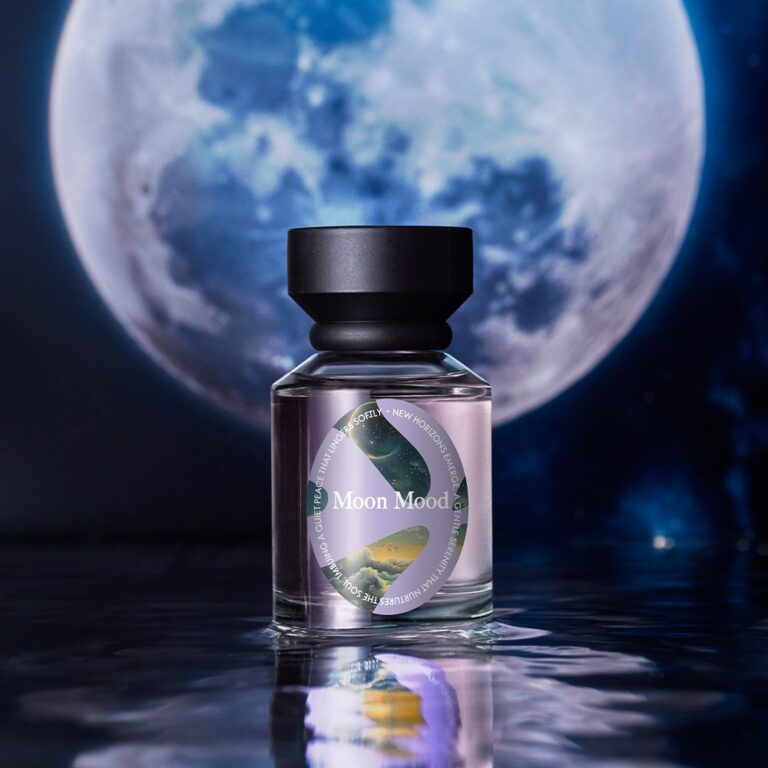
Oriflame's Student Perfumers Finish the Job: Prima Vanilla and Moon Mood Complete Top Scents

Back From the Vault · Nov 22
Kim Kardashian Promises a Bride One More Bottle of KKW Gardenia

Trade Show · Nov 22