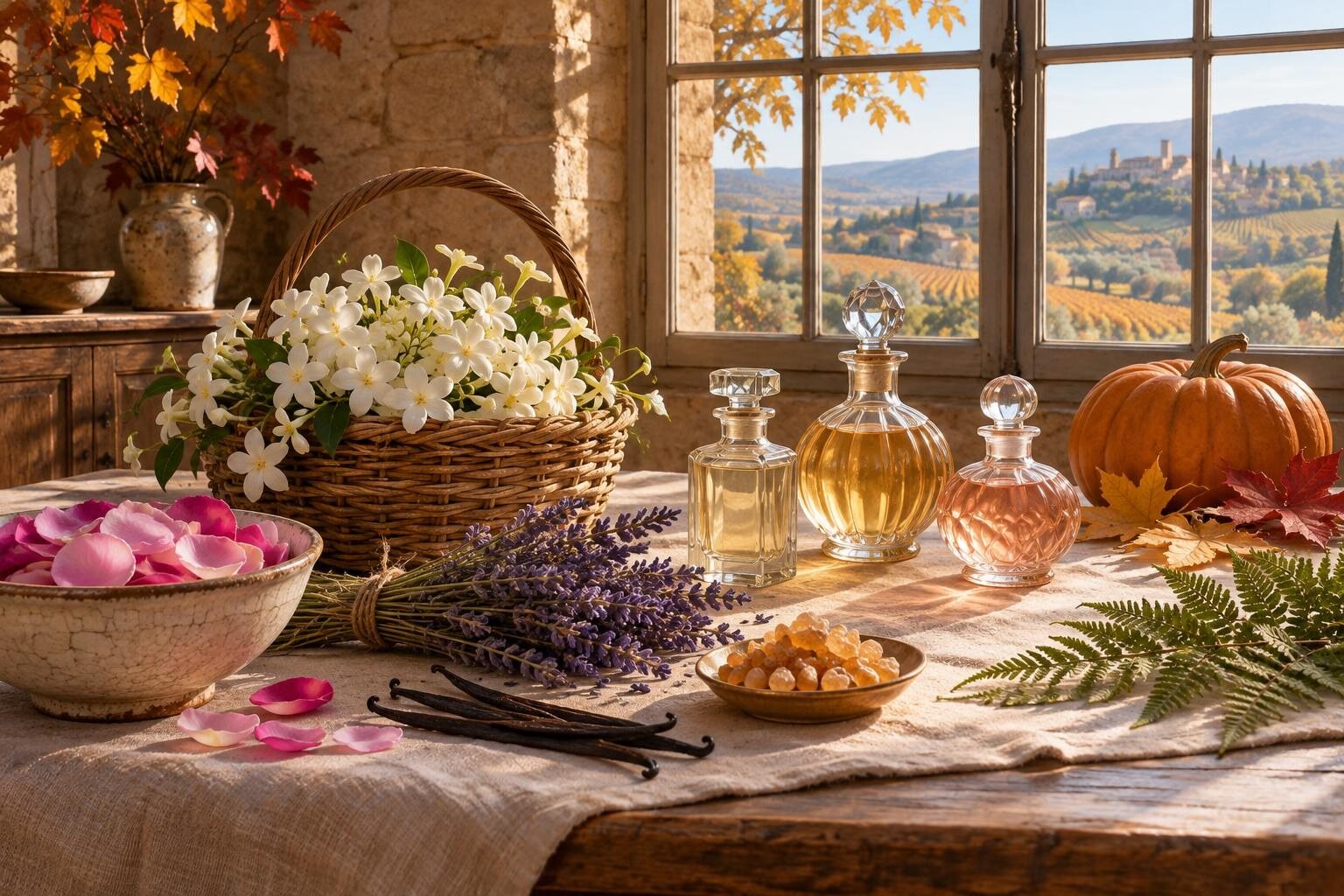
Every bottle on your dresser is a group project. The name on the label belongs to a fashion house or a celebrity, but the thing inside was made possible by a long line of growers, chemists, perfumers and shopkeepers, most of them long gone. On a day set aside for gratitude, it seems only fair to raise a glass to a few of them, and to say plainly what each one gave you.
The fern that named a family
In 1882, Paul Parquet, a perfumer and part owner of the house of Houbigant, made Fougère Royale. Ferns have no real smell of their own, so he built one out of lavender, oakmoss and coumarin, a sweet, hay-like material chemists had first made in a lab in 1868. It was one of the first perfumes to lean on a synthetic, and it gave its name to an entire family: the fougère, French for fern. If you have ever worn a clean barbershop scent, you are wearing Parquet’s idea.
Their names rarely appear on any box. They belong in this toast first.
The chemists who bottled vanilla
In 1874, two German chemists, Ferdinand Tiemann and Wilhelm Haarmann, worked out how to make vanillin, the main scent molecule of vanilla, from a compound found in pine bark. They went on to found Haarmann & Reimer and begin making it in a factory in Holzminden. Real vanilla is slow and costly to grow; their work put its warmth within reach of ordinary perfumes, and of ordinary budgets. Every cozy vanilla on a drugstore shelf owes them a thank-you note.
Guerlain’s long-running abstraction
In 1889, Aimé Guerlain introduced Jicky. It was among the first perfumes to use synthetic materials, and it is often described as the first abstract perfume, one that doesn’t try to copy a single flower. Jicky is still made today, which is its own kind of tribute: a formula good enough that people have kept asking for it for more than 130 years.
Coty, Lalique and perfume for everyone
François Coty’s breakthrough came in 1904 with La Rose Jacqueminot. His larger gift was a business idea: sell fine perfume at many prices, including smaller, plainer bottles that working families could afford. He also brought in the glass artist René Lalique, whose first perfume bottle, L’Effleurt, was made for Coty between 1908 and 1911. Coty’s Chypre, from 1917, built on bergamot, oakmoss and labdanum, named another whole family. Beauty at a fair price, in a bottle worth keeping: that is a very modern wish, and he got there early.
Chanel, Beaux and the fifth vial
In 1920, the perfumer Ernest Beaux set out a row of numbered samples for Gabrielle Chanel. She chose the fifth, and Chanel No. 5 went on sale in Paris in 1921. Beaux used aldehydes, lab-made materials that give a bright, clean lift, in amounts no one had dared before. The result helped make it normal for a designer to sell a perfume under her own name, and it is still one of the best-known bottles on earth.
Germaine Cellier, who would not be quiet
Germaine Cellier was one of the first prominent women perfumers in a trade run by men. She made Bandit for Robert Piguet in 1944, one of the first leather chypres; Vent Vert for Balmain in 1947, often called the first green perfume; and Fracas in 1948, still the tuberose perfume others are measured against. Bold perfume made by a woman, worn by anyone who likes it: thank Cellier for opening that door.
Edmond Roudnitska and the lily you can’t extract
The lily of the valley gives up no oil worth using, so when Edmond Roudnitska made Diorissimo for Dior in 1956, he built the flower from aroma chemicals. Ten years later came Eau Sauvage, a fresh cologne that still feels current. Roudnitska wrote about perfume as an art with its own rules, and he lived his argument. Every perfumer who signs a scent as a work of their own walks a road he helped pave.
Estée Lauder’s bath oil
In 1953, Estée Lauder launched Youth-Dew and sold it as a bath oil. At the time, many women waited for a man to buy them perfume and saved it for special nights. A bath oil was something you could buy for yourself and use every day, and many women soon wore it as their perfume. If you have ever bought a bottle just because you wanted it, Mrs. Lauder saw you coming.
The hands in the fields
None of it works without the people who grow and gather. In 2018, UNESCO recognized the skills tied to perfume in the Pays de Grasse in southern France: growing the plants, knowing and processing the raw materials, and composing the perfume. It also noted that the work depends on seasonal labor. The same is true wherever vanilla is pollinated by hand, jasmine is picked before the sun climbs, and resin is gathered from trees. Their names rarely appear on any box. They belong in this toast first.
And to you
Finally, thank you for reading, listening and writing to us. A newspaper is only as good as the people who open it, and ours are curious, kind and very good at catching our typos. Happy Thanksgiving from all of us at The Daily Atomizer.
Sources
- Fougère and Fougère Royale (Wikipedia)
- Vanillin: Tiemann and Haarmann, 1874 (Wikipedia)
- Jicky (Wikipedia)
- François Coty (Wikipedia)
- L’Effleurt bottles for Coty (Musée Lalique)
- Chanel No. 5 (Wikipedia)
- Germaine Cellier (Wikipedia)
- Edmond Roudnitska (Wikipedia)
- Fragrance firsts: Youth-Dew (Estée Lauder)
- The skills related to perfume in Pays de Grasse (UNESCO, 2018)
More on No. 5DiorissimoChanel 9Coty 8Dior 5Estée Lauder 5Guerlain 3
Keep reading
From the Editor's Desk · Nov 22
Black Friday Perfume Sales: A Discount Is Only as Honest as the Price It Starts From
The Marly Deal · Nov 28
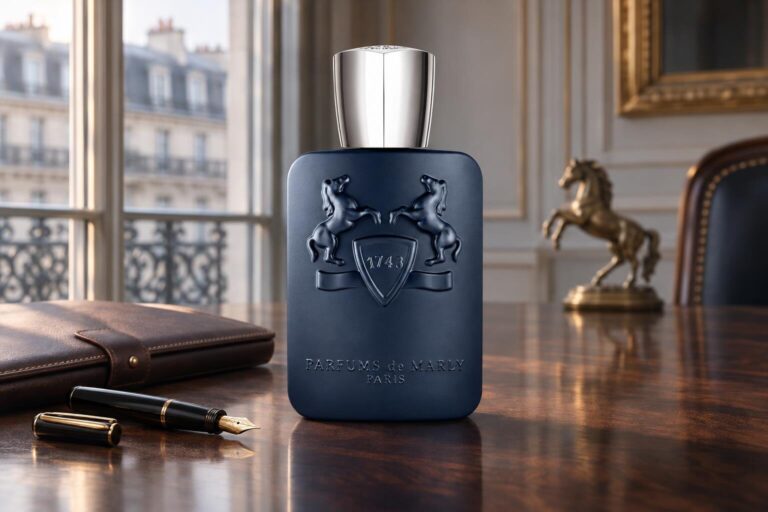
Puig Buys Parfums de Marly and Initio: €1.2 Billion for the House of Layton and Delina
Saturday Deals · Nov 28